

Choosing between an iPad and an Android tablet is often seen as just a battle of brands. But for important business projects, it is actually a choice between two very different ways of managing your work.
It’s common to focus on personal likes: some teams are comfortable with Apple, while others want the freedom of Android. Procurement teams look at the price, and IT assumes they can fix the technical details later. This conversation is easy and familiar, but it doesn’t tell the whole story of how the work actually gets done.
When you rent tablets for a specific project, they aren’t just gadgets, but tools that get the job done. As these devices move between different people and locations, the choice of platform stops being about comfort. It becomes a question of reliability.
Most tablet choices start with a simple question about brand preference. But for a high-stakes project, that is the wrong place to begin. When you are managing a field audit or a global training session, the logo on the back of the device matters far less than the software’s ability to stay online.
In 2026, the choice between iPad and Android is no longer about personal taste. It is about building a workflow that cannot fail.
The Hidden Math of Deployment Friction
In a business setting, a tablet is not just a standalone screen. It is a critical component of your operational workflow. When a device stops working, the real cost is rarely the repair bill. The true expense shows up in the delays that ripple through your entire project:
- Workflow Stagnation: Processes stall while employees wait for a replacement or a fix.
- Idle Labour Costs: Paid teams stand idle instead of completing their assigned tasks.
- Data Fragmentation: Collection pauses, leaving critical gaps in your real-time reports.
- Decision Paralysis: Strategic moves are delayed because the necessary information is not available.
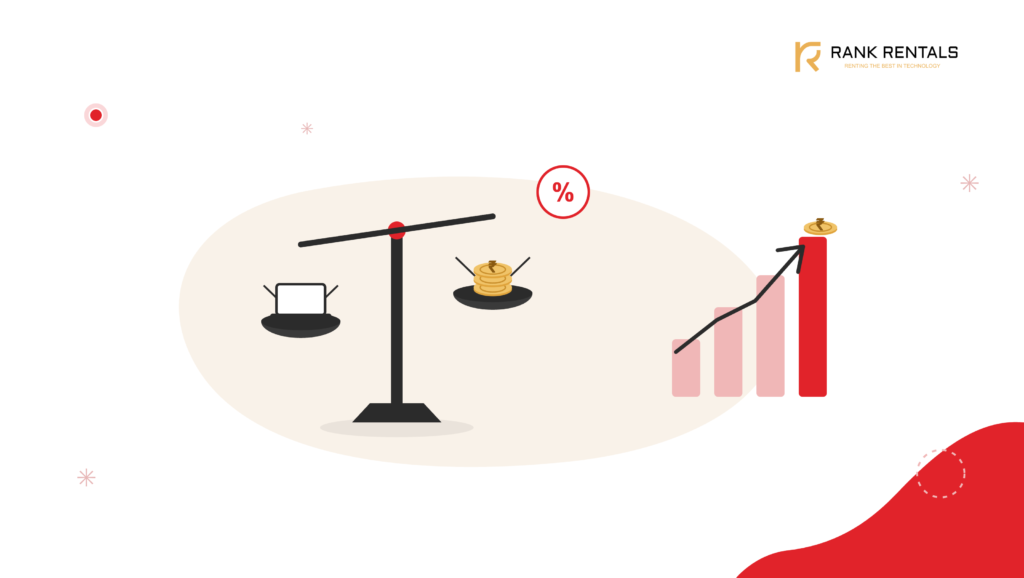
The Financial Stakes in 2026: Independent research shows how quickly these costs escalate. Recent global surveys of business leaders in 2026 reveal that for mid-to-large companies, even one hour of a major technical shutdown can cost over $1 million (approx. ₹8.4 crore). For most organisations, the average cost of downtime is now estimated at over $300,000 (approx. ₹2.5 crore) per hour.
The Recovery Gap: Fixing the problem involves more than just swapping hardware. You have to identify the issue, set up a new device, and ensure the previous data is recovered and synced. This recovery time often consumes three to four hours of lost work per person, per incident.
In the end, the hardware that looks like a bargain during procurement can quickly become your biggest expense if it causes consistent delays in the field.
Ecosystem Philosophy: Uniformity vs. Versatility / The Strategy Behind the Tablet: Predictable vs. Flexible
Choosing between an iPad and an Android tablet should be based on how you plan to run the project from start to finish, not just how things look on launch day. The two platforms follow very different approaches, and those differences shape how smoothly a project runs once real work begins.
The iPad Strategy: The Predictable Choice
Apple’s approach is built around standardisation. Apple designs both the device and the software, which means every iPad works in largely the same way. For businesses, this consistency acts as a safety net. It helps teams:
- Keep things simple: Every user sees the same screens and uses the same controls, regardless of which iPad they receive.
- Scale quickly: Adding more devices does not introduce surprises. Apps behave the same across the entire fleet.
- Reset and reassign easily: Clearing a device and handing it to a new user is fast and reliable.
- Reduce internal support effort: Fewer variations mean fewer unexpected “glitches” for IT teams to fix.
The Android Strategy: The Flexible Choice
Android follows a more open approach. It runs on devices made by many brands, in different sizes, strengths, and configurations. This flexibility gives businesses options that are difficult to achieve on iPads. Android tablets are often the better choice when:
- Specialised hardware is required, such as built-in barcode scanners or devices designed for rough, outdoor conditions.
- Large amounts of offline data are involved. Extra storage options (like memory cards) make it easier to work without constant internet.
- Custom apps are central to the workflow. Installing private or in-house software is often more straightforward.
The Regulatory Stakes in 2026
Under India’s Digital Personal Data Protection Act, 2023 (DPDP Act) and the notified Rules of 2025, the operational risk of tablet deployments has shifted from an IT concern to a boardroom exposure.
The Act authorises the Data Protection Board of India to levy substantial financial penalties for failure to implement “reasonable security safeguards.”
- Up to ₹250 crore for failure to prevent a personal data breach or maintain safeguards.
- Up to ₹200 crore for failures related to breach notification.
Crucially, regulatory exposure does not depend solely on a confirmed breach. Risk arises when organisations cannot demonstrate adequate controls or auditability. In this context, iPads on rent benefit from centralised update behaviour and uniform security controls, while Android allows deeper system-level control but requires more disciplined management to ensure every endpoint remains patched and defensible.
Renting as a Boundary, Not a Compromise
Renting tablets changes how risk is managed in a project.
When organisations buy hardware, they also take on a long chain of responsibility that often goes unaccounted for. The cost is not limited to the purchase itself. It continues well after the project ends.
Once a project is complete, the tablets do not disappear. They stay in inventory and continue to demand attention:
- Storage and inventory tracking: Physical space is taken up, and staff time is spent managing devices that are no longer in active use.
- Maintenance and value loss: Hardware ages even when it sits unused. Batteries degrade, software becomes outdated, and resale value drops. In today’s market, business-grade tablets can lose a significant portion of their value within a year of storage.
- Compliance risk: Under India’s Digital Personal Data Protection Act, every stored device is a potential liability. A tablet that is misplaced or not properly wiped carries the same regulatory risk as an active device, including exposure to penalties of up to ₹250 crore.
Renting tablets for a defined timeline avoids this long tail entirely. Hardware is treated as a temporary utility rather than a permanent obligation. Decisions made to meet a project deadline do not turn into long-term operational burdens.
In this model, lifecycle responsibilities such as secure data wiping, compliance handling, and responsible disposal shift to the rental partner. Renting is not a short-term compromise. It is a practical way to match responsibility with actual project needs.
When to Choose What: A Strategic Guide
The decision between an iPad and an Android tablet should be driven by your specific project requirements, not by habit or brand familiarity. Use this guide to quickly identify which platform aligns best with your goals.
Choose iPads on Rent When
- User consistency is vital: Choose an iPad when you need a true plug-and-play experience for teams that may not be tech-savvy or for users who rotate frequently.
- Client experience matters: When the tablets are used at premium events, demos, or sales meetings, where the device itself reflects your professional brand.
- Compliance must be centralised: When you need the ability to push security updates and policies to every device at the same time to stay legally compliant.
Choose Android Tablets on Rent When
- Customisation is key. When your workflows rely on private company apps, specialised tools such as barcode scanners, or unique system-level controls.
- Budget precision is necessary. If you are running a large, low-complexity deployment, such as a basic survey or data capture exercise, where cost alignment is critical.
- Conditions are rugged. If your teams operate in field environments that demand durable hardware beyond standard consumer tablets.
Final Thought
The iPad vs Android tablets debate does not have a single winner. What matters is whether the choice you make continues to hold up once the initial urgency of the project has passed.
At Rank Computers, experience across thousands of deployment points has led to a consistent pattern. Successful outcomes are not driven by brand selection, but by how well the device choice aligns with real operational demands. Reliability is rarely found in the logo on the screen. It is built into the infrastructure, controls, and support systems behind it.
Choosing the right tablet is not about what your team prefers using today. It is about ensuring that when conditions change, as they inevitably do, your project stays on track, your data remains secure, and your attention stays on the work rather than the hardware.