

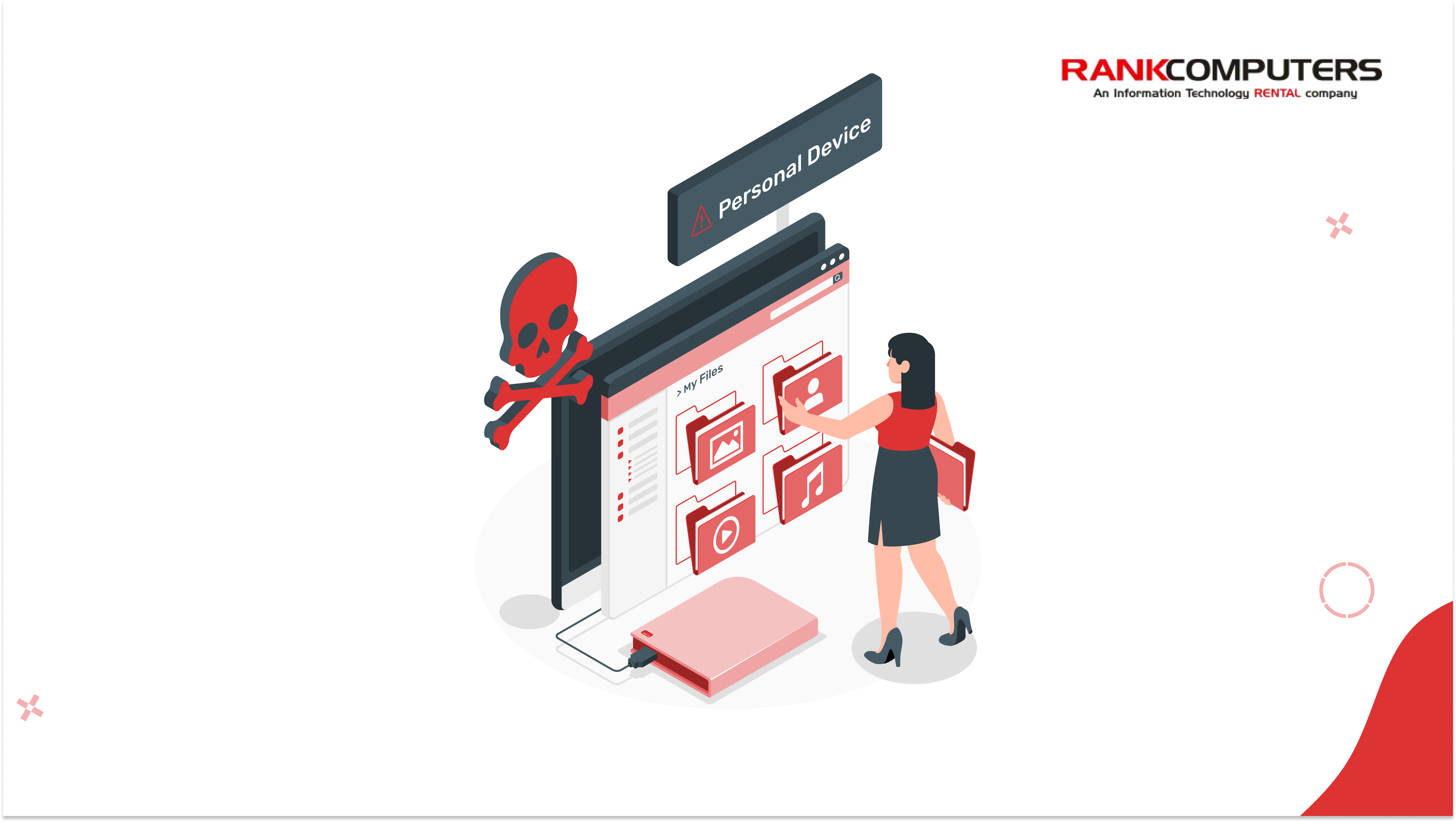
In most organisations, compliance risks linked to personal devices do not announce themselves.
Emails get answered faster. Files are easier to access. Work continues without interruption.
The problem is that compliance does not measure how smoothly work happens. It measures whether an organisation can demonstrate control over how business data is accessed, stored, and protected.
That gap is easy to miss until scrutiny arrives.
In January 2025, Axis Bank was ordered to pay ₹1.76 crore in compensation, not because of a large-scale breach, but because it could not adequately demonstrate control over how customer data was being accessed on employee devices when evidence was demanded. The exposure was not sudden. It had been quietly embedded in everyday workflows.
As hybrid work has become standard, bring your own device (BYOD) practices have shifted from managed exceptions to informal norms. Compliance frameworks, however, have not shifted with them. They continue to assume control, traceability, and enforceability across every device used for business work.
How Personal Devices Create Compliance Exposure
When employees use personal devices for business tasks, compliance depends on infrastructure that the organisation does not fully own or govern. From a regulatory standpoint, this is a structural limitation.
Compliance frameworks focus on data accountability, not device ownership. Organisations are expected to demonstrate:
- who accessed sensitive data,
- from which device,
- under what controls,
- with what audit trail,
- and whether access or data could be revoked or deleted.
In BYOD environments, these controls vary by device. Enforcement relies heavily on user behaviour rather than system guarantees. That inconsistency is where compliance risk begins.
What Indian Regulators Expect
Across Indian frameworks, enforcement has shifted decisively toward evidence-based compliance.
The RBI’s Cyber Security Framework restricts personal device usage by default and evaluates whether access controls, monitoring, encryption, and secure erasure can be demonstrated in practice. The DPDP Act, active since November 2025, requires “reasonable security safeguards” for personal data. Importantly, penalties do not require a breach. Failure to demonstrate safeguards is sufficient.
Section 43A of the IT Act reinforces the same principle through case law. Compensation has been awarded where organisations could not prove reasonable security practices were in place, even when no malicious intent was established.
The expectation across regulators is consistent: organisations must be able to show control, not merely claim it.
How Data Quietly Slips Out of View
Loss of traceability on personal devices rarely looks dramatic. It looks familiar.
- A confidential file downloaded locally to work offline
- A sensitive email saved to a personal folder
- A screenshot automatically backed up to a personal cloud account
- A document forwarded to a personal email for later access
Individually, these actions feel harmless. Over time, they leave organisations with:
- business data outside approved systems,
- multiple uncontrolled copies,
- unclear retention timelines,
- and no reliable way to prove secure deletion.
At this point, compliance risk already exists, even if nothing has visibly gone wrong.
When the Risk Becomes Visible
Personal devices rarely disrupt daily operations. They often improve short-term productivity. This is why BYOD persists.
The risk surfaces later, during audits, regulatory reviews, client security assessments, or investigations. These moments do not ask how work was intended to happen. They ask for evidence.
- Can encryption be verified?
- Can access logs be produced?
- Can data handling be reconstructed?
Many BYOD environments struggle here, not due to negligence, but because the infrastructure was never designed to produce defensible evidence across personal devices.
Why Organisations Should Reconsider BYOD
Cost is often the point where reassessment becomes unavoidable.
On paper, BYOD looks cheaper. Most organisations spend around ₹500–₹1,000 per employee per month on stipends and basic controls. For a 200-person team, this translates to ₹35–65 lakh annually.
Managed devices, provided through a business laptop rental model, typically cost ₹30–45 lakh per year for the same team.
The difference emerges once risk is factored in.
A single RBI cybersecurity observation can result in penalties of ₹1–3 crore. Section 43A compensation awards have ranged from tens of lakhs to over ₹1 crore per incident. Under the DPDP Act, penalties can apply even without a breach if safeguards cannot be demonstrated.
In practical, risk-adjusted terms:
- BYOD: ₹1+ crore annual exposure in regulated environments
- Managed devices: ₹40–75 lakh annually with significantly lower compliance risk
For many organisations, one audit finding is enough to erase years of perceived BYOD savings.
Shadow IT is Now a Compliance Issue
Personal devices make it easier for informal systems to grow. Files move to personal cloud storage. Communication shifts to faster messaging platforms. Tools are adopted outside formal oversight.
Under DPDP obligations, this loss of visibility becomes regulatory exposure. Organisations are required to know what personal data they hold, where it resides, and how it is protected. Shadow systems enabled by BYOD make this increasingly difficult to demonstrate.
What was once an IT governance concern is now a compliance one.
When BYOD Still Works, and When it Doesn’t
BYOD can still make sense when data sensitivity is low, regulatory exposure is minimal, and teams are small and stable.
The risk profile changes significantly in regulated sectors such as banking, insurance, financial services, healthcare, and larger organisations subject to DPDP obligations. Here, the burden of proof is higher, and the cost of failing to demonstrate control is substantial.
Rank Computers’ Perspective
At Rank Computers, we have witnessed this shift as it has become visible throughout our decades of client work.
BYOD began as a convenience. As enforcement tightened, it became a compliance stress point. Across organisations, the same pattern appears: policy-heavy approaches struggle under audit, while infrastructure-led control holds.
That experience shapes how devices are provisioned and managed today. The focus is not on reacting to audits, but ensuring device infrastructure stands up when evidence is required.
The Question that Matters
The compliance risks of using personal devices for business work do not disappear when they are ignored. They remain invisible until accountability arrives.
The real question is not whether work can continue on personal devices. It usually can.
The question is whether an organisation can confidently demonstrate control when evidence is demanded.
In today’s compliance environment, intention is not enough. Policies matter less than enforceable systems. Convenience does not outweigh accountability.
That distinction is where organisational resilience is either built or quietly lost.