
There’s a very specific kind of decision startups keep running into.
“We need better machines.” Not eventually – now.
The work has already outgrown what your team is using. Builds take longer than they should. Design files load slower. Even simple workflows start to feel heavier than they need to be. At this point, upgrading is obvious. Paying for it is where it gets complicated.
Because every rupee you put into hardware is a rupee you’re not putting into hiring, distribution, or product. And unlike those, hardware doesn’t compound – it just sits there, slowly losing value.
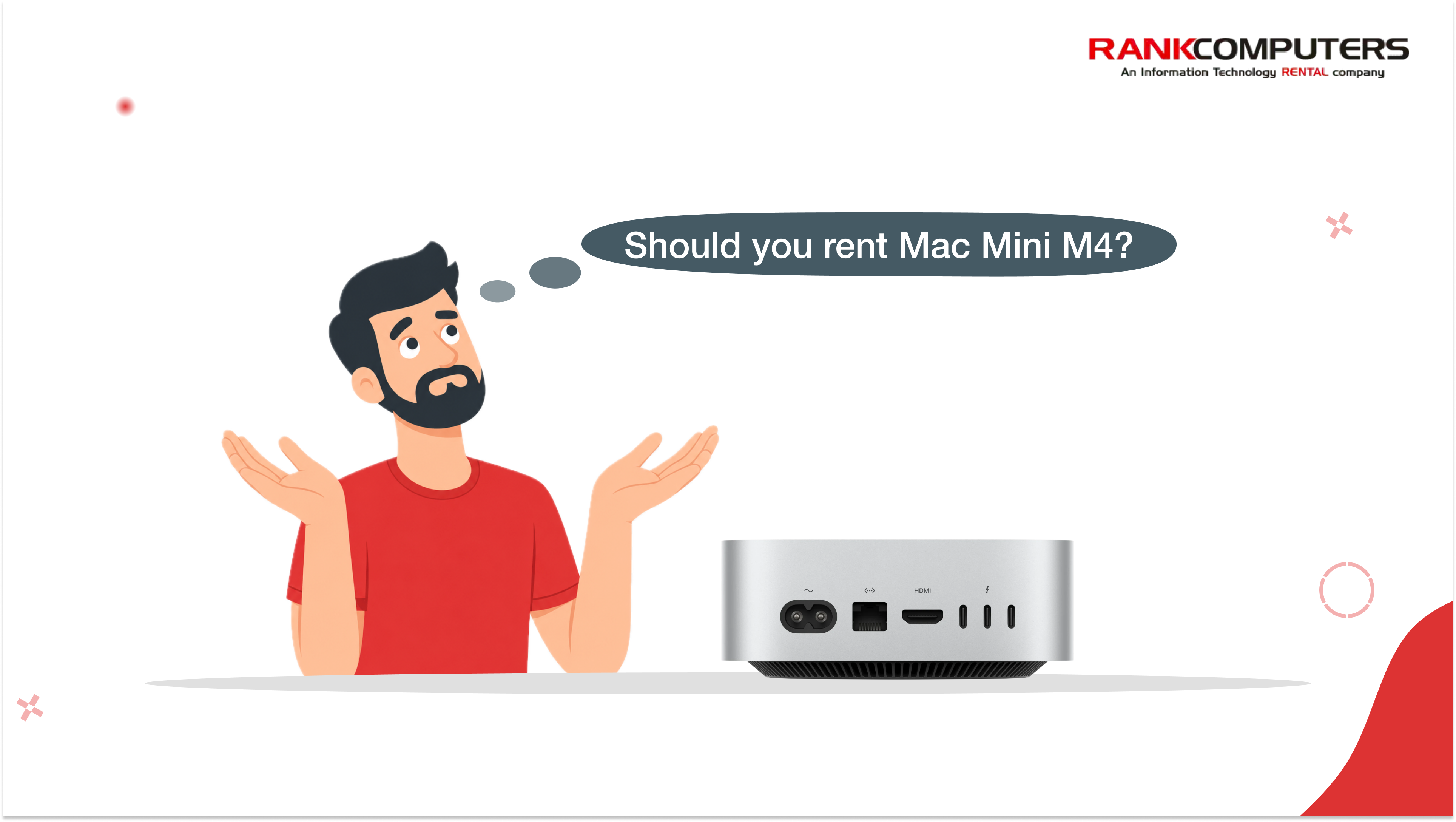
That’s the tension this conversation sits inside. And that’s exactly why the Mac Mini M4 – and more importantly, how you access it – has become relevant for startups right now.
Why the Mac Mini M4 Has Earned Its Place in Startup Setups
It’s easy to dismiss new hardware as incremental. The M4 isn’t.
Apple’s unified memory architecture changes how the system handles real workloads. The CPU, GPU, and Neural Engine all pull from the same memory pool, which removes a lot of the friction that traditionally comes from moving data between separate components. You feel this in the work itself.
For a startup, that matters because the Mac Mini M4 – especially even at its base configuration – punches well above its price bracket.
You’re not buying an entry-level machine. You’re getting a system that can handle development workflows, content production, data work, and even early-stage machine learning tasks without stepping into workstation-level costs. (If you’re evaluating hardware for running models locally, this guide covers the specs worth knowing.)
These machines also draw significantly less power compared to older Intel-based systems. If you’re running a small office, a co-working setup, or even a distributed team with multiple units, that efficiency quietly reduces overhead month after month.
The Real Friction Isn’t Capability. It’s Ownership
If the Mac Mini M4 is this capable, the natural move seems simple: Buy it.
But this is where startup reality starts to push back.
Let’s say you’re equipping a team of six.
Depending on configuration, you’re looking at ₹2–3 lakh upfront. That capital is now committed. It’s not available for hiring, marketing, or extending runway.
And startups, by nature, don’t stay still. You might bring on a new developer cohort and suddenly need eight more machines within two weeks.
Or the opposite happens. A project wraps. And you’re left with machines that made sense three months ago, but now sit unused.
Then there’s depreciation – the moment you purchase hardware, its value starts dropping. If your needs change in 12–18 months, you’re left holding machines that no longer match your requirements.
None of this makes buying wrong. It just makes it… heavier. It’s a shift a growing number of businesses are making – moving from ownership to access as the default for hardware that depreciates.
What Rental Changes (And Why Startups Gravitate Toward It)
Rental shifts the conversation from ownership to usage. Instead of committing upfront, you move to a structure where hardware adjusts with your team.
You can start small – two machines if that’s what you need. Scale up to twelve as the team grows. Scale down if hiring slows or priorities shift.
The hardware footprint begins to mirror your actual situation, not a projection you made months ago. For startups, that flexibility is the main advantage. If you’re thinking through the broader setup – not just the desktop, but the full office IT picture – this guide is worth reading before you commit to anything.
Before You Commit: What to Check in a Rental Provider
This is where many teams get it wrong. They decide to rent – and then treat provider selection like a basic procurement step. It’s not.
The quality of your rental partner determines whether this becomes a smooth system… or just another task your team has to manage.
Before you sign anything, get clarity on these points:
What happens when a machine fails?
Don’t settle for general assurances.
Ask directly:
- Do you repair the unit, or replace it immediately?
- What is the turnaround time?
- Do you provide a temporary replacement to avoid downtime?
If downtime stretches into days, your team absorbs that cost. Get clarity. And get it in writing.
Are configurations aligned to real work?
Not every team needs the same setup. A developer running Xcode, containers, and local models will need more memory than someone working on lighter tasks.
Ask:
- What configurations are available?
- Can we mix configurations within the same deployment?
- Can we upgrade if our needs change?
If the options are too rigid, you’ll end up compromising – either on performance or cost.
What are the actual contract terms?
This is where flexibility can quietly disappear.
Look for:
- minimum lock-in periods
- early termination clauses
- upgrade or downgrade flexibility
If your business changes, these terms determine whether rental still works in your favour.
How reliable are logistics?
Hardware arriving late is still a problem, regardless of ownership.
Ask:
- What is your typical delivery timeline?
- Can you support urgent onboarding cases?
Because when a new hire joins, delays affect real work.
Does pricing improve with scale?
If you’re deploying multiple units, there should be room for better pricing. If a provider treats one machine and ten machines the same way, that’s worth questioning.
Common Objections, Honestly Answered
“Buying is cheaper in the long run.”
That’s often true – if nothing changes for four years. But in startups, things rarely stay that stable. The value of flexibility isn’t just convenience. It’s avoiding misaligned decisions.
“We lose ownership.”
In theory, yes. In practice, hardware is a depreciating asset. The Mac Mini M4 is excellent today. In a few years, it won’t be. Ownership doesn’t protect against that.
“Setup will be complicated.”
Modern Mac systems are built for managed environments. With the right provider, setup is handled, and your team works as they normally would.
Where Rank Computers Fits In
At this point, the model is clear. The difference comes down to execution.
With Rank Computers, the emphasis is on making rental behave the way it should inside a working startup:
- configurations that match real workloads
- reliable turnaround when you need machines quickly
- support that resolves issues without dragging your team into the process
For startups that don’t have the bandwidth to manage hardware as a separate function, that difference becomes meaningful quickly.
What This Decision Really Comes Down To
The Mac Mini M4 gives you access to strong, reliable performance. That part is not in question. The real decision is simpler.
- Do you want to commit capital to hardware based on where you are today?
- Or keep that flexibility – so your setup can evolve as your business does?
For startups, that difference matters more than most founders realise – until they feel it. And by then, the machines are already on the shelf.