
When employees complain about slow laptops, the instinct is almost always the same: buy something better. More RAM, a faster processor, higher specifications across the board.
It feels like the safe call. Nobody wants to be the IT manager who under-bought and now has a team waiting on spinning loading screens.
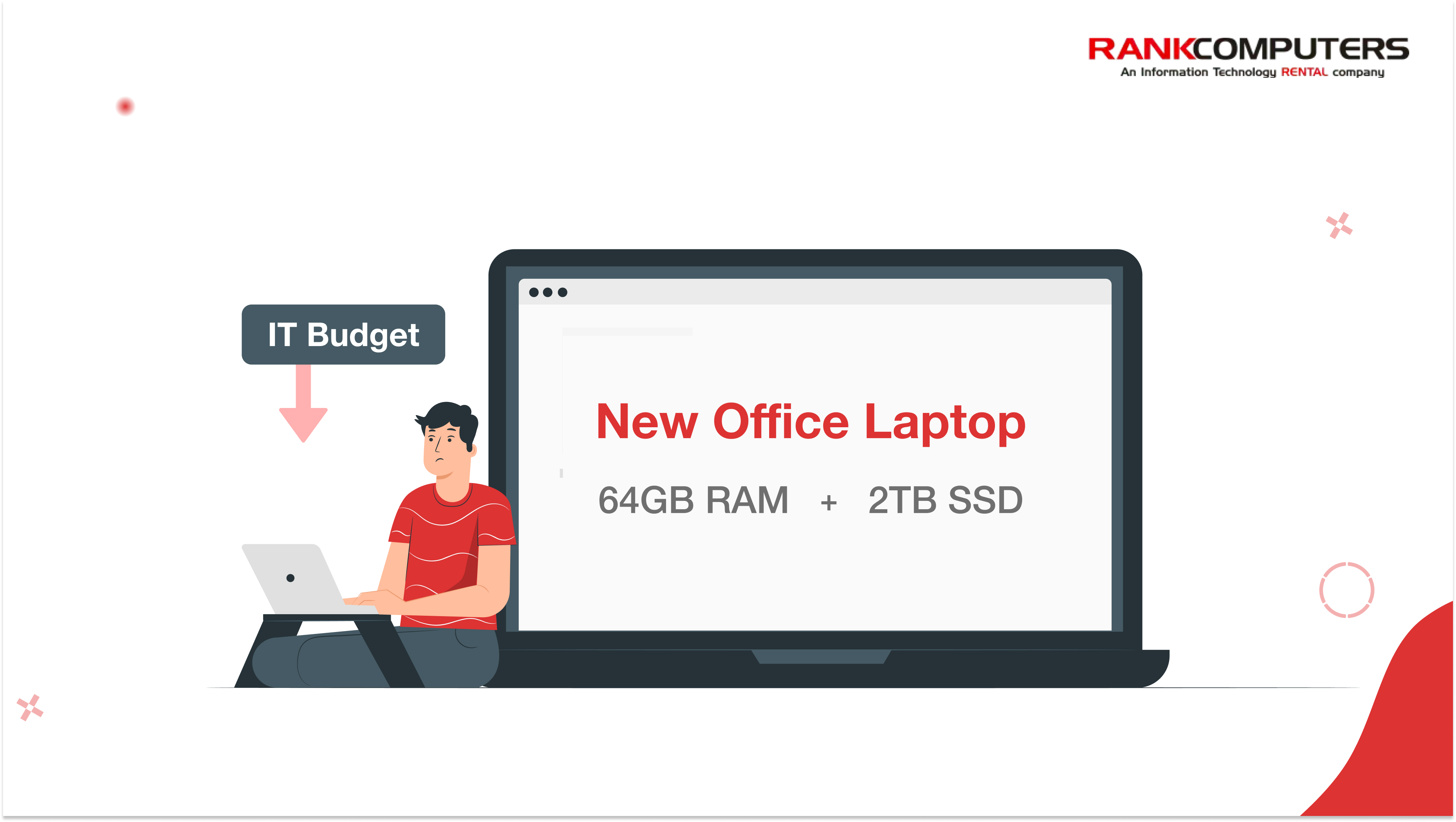
But here’s the thing most businesses get wrong. The problem usually isn’t that they’re buying the wrong laptops. It’s that they’re buying the same laptop for everyone – and when that decision gets multiplied across fifty or a hundred employees, the cost adds up in ways that rarely show up until someone actually sits down and does the math.
Why Higher Specs Feel Like the Safer Bet
Nobody overspends on purpose. The decision almost always comes from a reasonable place.
A higher specification reduces the risk of performance complaints. It simplifies procurement – order the same thing for everyone, no decisions to second-guess. It creates consistency across the fleet. It feels future-proof, which is a comforting thing to tell yourself when you’re signing off on a six-figure purchase order.
The problem is that office workloads aren’t actually standardised, even when the hardware is. A finance executive, a software developer, a designer, and a sales manager are all sitting in front of laptops – but they’re not doing the same things with them. Buying as if they are is where the waste begins.
What This Actually Costs, in Real Numbers
Let’s make this concrete.
Stepping up from a 16GB to a 32GB configuration on a business laptop in India typically adds somewhere in the range of ₹8,000 to ₹15,000 per device, depending on the brand and model. Jumping a processor tier – say, from a Core i5 to a Core i7 – can add a similar amount again.
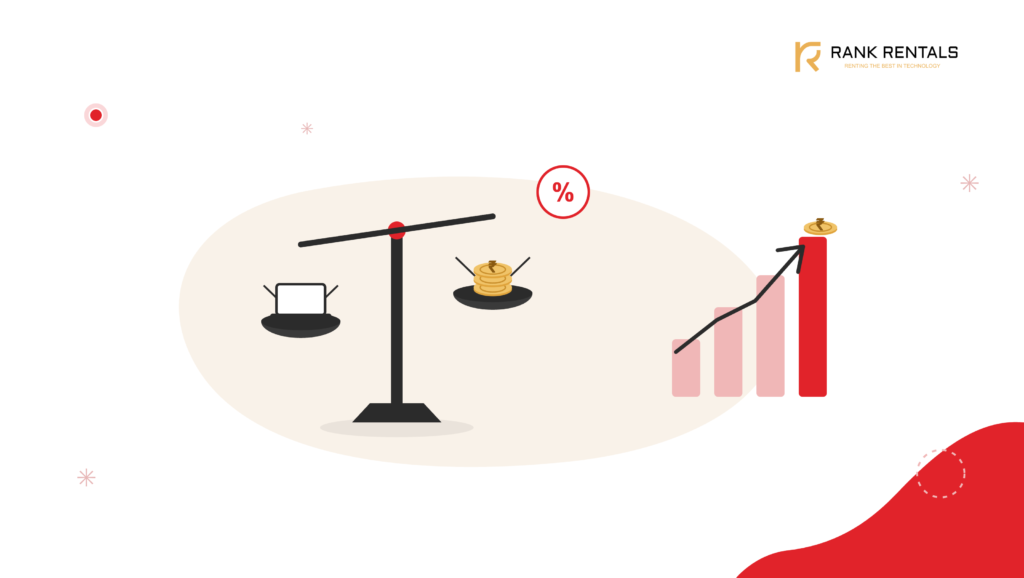
Now take a business with 100 employees. If even 60 of those employees are in general productivity roles – email, browsers, Teams, spreadsheets – and they’ve all been issued the same higher-spec configuration meant for the other 40 who actually need it, that’s 60 laptops carrying ₹10,000–₹20,000 of unused capability each. That’s ₹6–12 lakhs spent on performance that’s quietly sitting idle, doing nothing for productivity, every single refresh cycle. And it compounds.
Once a higher specification becomes “the standard,” it tends to carry forward into every future purchase by default, whether the workload has changed or not. Nobody revisits the decision – they just reorder the same thing.
What Most Office Work Actually Requires
Most employees spend the bulk of their day in Outlook, Teams, a browser, spreadsheets, a CRM, and presentation software. These are not demanding workloads. A laptop with 16GB of RAM and a mid-tier processor handles all of this comfortably – current guidance for business computing puts 16GB as the practical floor for comfortable multitasking in 2026, not the ceiling.
When a laptop does feel slow for this kind of work, the laptop usually isn’t the actual problem. More often it’s internet connectivity, the way an application is built, clunky workflows, or network performance. Throwing more RAM at a connectivity issue doesn’t fix anything – it just makes the procurement budget worse without making anyone’s day better.
Where Higher Specs Genuinely Earn Their Cost
None of this means everyone should be on entry-level hardware. Some roles place real, sustained demand on a machine – video editing, 3D modelling, CAD work, software development, data analysis, virtual machines, rendering. For these users, 32GB of RAM and a stronger processor isn’t a luxury, it’s the difference between a productive day and a frustrating one.
The mistake isn’t buying powerful laptops. It’s assuming everyone needs one.
A Better Way to Spec: Build Around the User, Not One Default
The organisations that get this right don’t buy one configuration for everyone. They build a small number of clear profiles and assign people to the right one.
General productivity users – email, browsers, documents, spreadsheets, meetings. A reliable business laptop with 16GB RAM and a current-generation Core i5 covers this comfortably and for years, not months.
Managers and heavy multitaskers – people regularly juggling multiple applications, dashboards, large spreadsheets, and back-to-back video calls. Worth stepping up to 16GB–32GB RAM and a Core i7, where the extra headroom genuinely gets used.
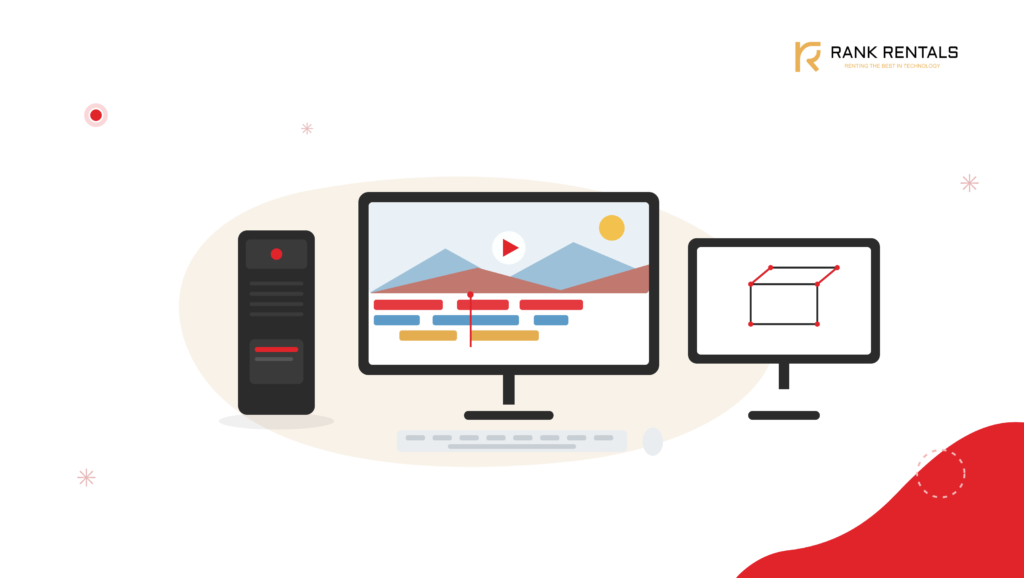
Creators and specialists – developers, designers, engineers, video editors, analysts running VMs or large datasets. These are the users where 32GB RAM, a stronger processor, and in some cases dedicated graphics are justified expenses, not indulgences.
Three profiles, applied consistently, replace one expensive default applied indiscriminately. That’s the entire shift – and it’s the difference between a procurement budget that makes sense and one that quietly bleeds money every cycle.
Why Renting Makes This Easier to Get Right
Buying hardware outright locks in a decision the moment the purchase order is signed. If a team’s needs were misjudged – too much spec, too little, or simply wrong for what the role turned out to require – that mismatch sits on the balance sheet for years.
Renting removes that rigidity. Instead of guessing what every employee might need for the next three years and buying accordingly, a business can deploy the right configuration for each role today – general productivity laptops for most of the team, higher-spec machines only for the people and projects that actually need them – and adjust as roles, teams, and projects change.
This matters most in situations like:
- A project team that needs high-performance laptops for six months, not permanently
- Contractors or seasonal staff who need devices for a defined period
- A new department being staffed before anyone’s actually sure what their hardware needs will look like
- A hiring spike where guessing the right spec mix in advance is genuinely difficult
In each case, renting lets the hardware match the actual workload at the actual moment it’s needed – without a business committing capital to a guess about the future.
HP, Dell, and Lenovo Laptops on Rent – Rank Computers
Rank Computers provides laptop rentals across a wide range of configurations – from standard business laptops suited to everyday productivity work, to higher-specification machines for development, design, and technical teams.
Since we stock multiple configurations across HP, Dell, and Lenovo, businesses can rent the right laptop for each role rather than defaulting to one specification across the board – and adjust quantities and configurations as requirements change.
If you’re planning a deployment and want to discuss what configurations make sense for your team, get in touch with us.
The Right Laptop Is the One That Fits the Work
The most expensive laptop in your fleet isn’t always the most productive one. Often, it’s just the most expensive.
Better procurement doesn’t come from buying more. It comes from actually looking at what each role requires and matching hardware to that – rather than defaulting to whatever feels safest to approve. Do that consistently, and the savings aren’t a one-time win. They compound, refresh cycle after refresh cycle, for as long as the business keeps making the same disciplined call.